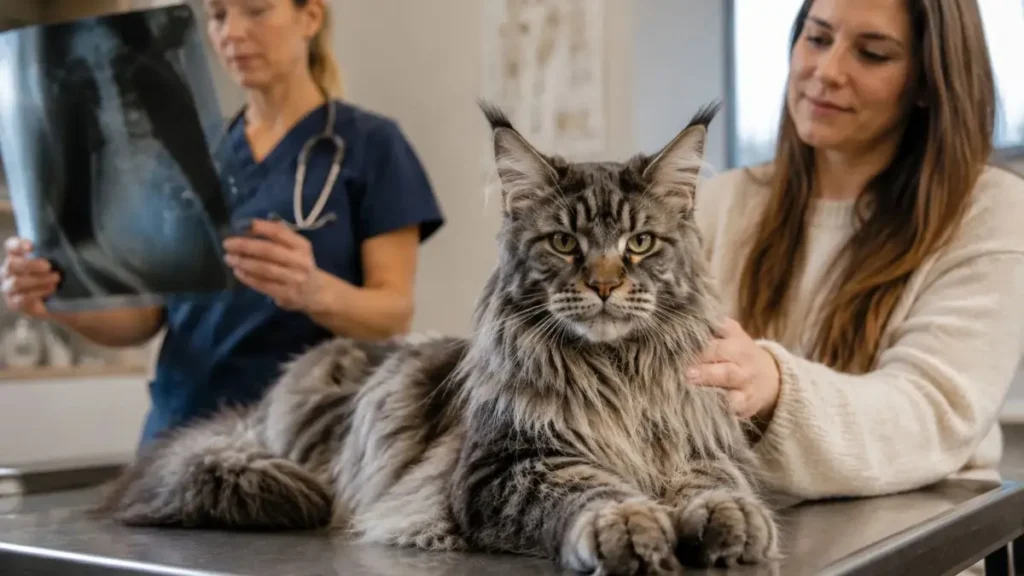
PKD is a genetic, incurable condition that most Maine Coon owners never see coming until kidney function has already declined. Here is what it costs, how pet insurance handles it, and the one decision that changes everything.
Pet insurance can cover Maine Coon polycystic kidney disease (PKD) and the chronic kidney disease it leads to, but only if your cat is enrolled before any symptoms appear and before the condition is diagnosed or documented. Because PKD is a hereditary, incurable condition, it is classified as a permanent pre-existing exclusion by virtually every standard insurer once it is on your cat's medical record. Enrolling a Maine Coon kitten before any vet visit documents a kidney concern is the only path to full coverage.
Total lifetime treatment costs for PKD-related kidney disease in cats range from $3,000 to over $10,000, and late-stage management can reach $400 to $800 per month. At 80 to 90 percent reimbursement, the right policy transforms that burden into a manageable monthly out-of-pocket cost.
What Is Polycystic Kidney Disease in Maine Coon Cats?
Polycystic kidney disease, commonly called PKD, is a hereditary condition in which fluid-filled cysts form inside the kidneys at birth and grow progressively larger over the cat’s lifetime. Unlike an illness that develops from exposure or aging, PKD is present from the moment a kitten is born. The cysts are initially too small to cause functional impairment, but they grow steadily and at varying rates, gradually replacing healthy kidney tissue until the kidneys can no longer filter waste products effectively. The end point of unmanaged PKD is chronic kidney disease and, ultimately, kidney failure.
PKD in cats is inherited as an autosomal dominant trait, which means that a cat needs only one copy of the mutated gene from one parent to develop the condition. If one parent carries the defective PKD1 gene, statistically around half of their offspring will inherit it. This is why responsible breeding programs screen breeding cats through DNA testing or ultrasound, and why buyers should always request proof of PKD-negative status when purchasing a Maine Coon kitten from a breeder.
The condition’s full clinical name is autosomal dominant polycystic kidney disease, or AD-PKD, reflecting both the gene mechanism and the dominant inheritance pattern. As noted by Cornell University’s College of Veterinary Medicine, chronic kidney disease caused by PKD is progressive with no definitive cure, and the goal of treatment is to slow its progression and maintain the best possible quality of life for the affected cat.
Most Maine Coon cats with PKD do not show any clinical signs of the disease until they are approximately seven years old, according to veterinary documentation from MaineCoon.org and Dr. Judy Morgan’s feline health research. This means an owner can spend six or seven years completely unaware their cat has a condition that has been silently progressing since birth. By the time symptoms become noticeable, kidney function may have already declined significantly, which is exactly why early enrollment in pet insurance, before any symptoms surface, is the only reliable financial protection.
How Common Is PKD in Maine Coon Cats?
PKD is most widely associated with Persian cats, where peer-reviewed estimates suggest over 37 percent of the breed carries the PKD gene. Maine Coons occupy a more complex position in the research literature, with prevalence estimates varying by study population and geographic region.
A PubMed study evaluating 187 Maine Coon cats through ultrasound screening over an eight-year period found renal cysts in 7 of the cats screened (3.7 percent), with additional cats showing signs of chronic kidney disease or renal changes of unknown significance. A separate analysis cited by the American College of Veterinary Internal Medicine suggested that approximately 5 to 10 percent of Maine Coons may carry the PKD gene, though this figure varies depending on the lineage and the testing methods applied.
Maine Coon Central’s breed health research, drawing from the Journal of Feline Medicine and Surgery, confirmed that while Maine Coon prevalence is lower than in Persians, it is significant enough that voluntary pre-breeding screening programs have been established specifically for this breed in Switzerland, Germany, and other European countries.
A critical piece of context: Maine Coons share partial ancestry with Persian-influenced breeds in some historical lineages, and because PKD1 spreads through any breed that has used Persians in its genetic foundation or propagation, screening is considered essential for Maine Coon breeding programs rather than optional, according to documentation from Loving Lynx Maine Coon breeders and the Cornell Feline Health Center.
| Breed | Estimated Prevalence | Risk Level |
|---|---|---|
| Persian | 37%+ carry PKD gene | Very High |
| Himalayan | High (Persian-derived breed) | Very High |
| Maine Coon | 5–10% estimated; 3.7% cysts in screened sample | Moderate, screening recommended |
| Scottish Fold | Elevated (multiple hereditary risks) | Elevated |
| Domestic Shorthair / Mixed | Low baseline | Lower |
Sources: PubMed renal screening study (PMID 23735675), Maine Coon Central citing Journal of Feline Medicine and Surgery, Loving Lynx Maine Coon PKD documentation, Cornell Feline Health Center. Prevalence figures vary by population and testing method.
PKD Symptoms and IRIS Staging: What to Expect at Each Stage
Because PKD progresses silently for years before clinical signs emerge, most owners first encounter symptoms during what is already an intermediate or late stage of kidney function decline. The International Renal Interest Society (IRIS) staging system, used universally by veterinary professionals to classify feline chronic kidney disease, provides a framework for understanding what each stage means clinically and financially.
Common PKD and Chronic Kidney Disease Symptoms in Maine Coons
- Increased thirst (polydipsia) and frequent urination (polyuria): Often the first signs owners notice at home. Kidneys that cannot concentrate urine properly cause compensatory increases in water intake.
- Weight loss despite normal appetite: As kidney function declines, protein metabolism is disrupted and muscle wasting can occur.
- Reduced appetite and nausea: Buildup of waste products (uremia) in the bloodstream suppresses appetite and causes intermittent vomiting.
- Lethargy and reduced activity: Overall energy decline accompanying systemic effects of kidney disease.
- Enlarged, lumpy kidneys: May be detected by a veterinarian during a physical examination as PKD progresses and cysts grow large.
- Hypertension: Cornell University’s Feline Health Center notes that cats with chronic kidney disease are at elevated risk for high blood pressure, which can cause sudden vision changes, neurological symptoms, and heart complications.
| IRIS Stage | Clinical Status | Typical Annual Cost | Key Interventions |
|---|---|---|---|
| Stage 1 | Non-azotemic; minimal clinical signs | $600–$1,200 | Monitoring, early dietary adjustment |
| Stage 2 | Mild azotemia; subtle signs may appear | $1,200–$2,500 | Renal diet, quarterly bloodwork, hydration monitoring |
| Stage 3 | Moderate azotemia; clinical signs present | $2,500–$5,000 | Sub-Q fluids, medications, frequent vet monitoring |
| Stage 4 | Severe azotemia; uremic signs | $4,000–$10,000+ | Intensive fluid therapy, multiple medications, monthly monitoring |
Sources: VetLens 2026 feline CKD cost analysis, Cornell University College of Veterinary Medicine IRIS staging guide, International Cat Care CKD treatment overview. Costs vary by location, cat size, and treatment intensity.
How Is PKD Diagnosed in Maine Coon Cats?
Diagnosing PKD involves several methods, each with different timing implications for pet insurance coverage, since the date a condition is first documented determines whether it is classified as pre-existing or newly arising under your policy.
Ultrasound Imaging
Abdominal ultrasound is the primary diagnostic tool for identifying PKD cysts in the kidneys. It is non-invasive, does not require sedation in most cases, and can detect cysts as small as a few millimeters. The PubMed screening study cited earlier used ultrasonography across 187 Maine Coons, confirming its reliability as a breed-wide screening method. Ultrasound can typically be performed from around 10 months of age for reliable results. An ultrasound to investigate kidney concerns typically costs $200 to $400 at a general practice clinic and may be higher at a specialist facility.
DNA (Genetic) Testing
A DNA test for the PKD1 gene mutation can confirm whether a cat carries the hereditary defect, even before any cysts are detectable by imaging. DNA tests for PKD are offered by several laboratories including the University of California Davis Veterinary Genetics Laboratory. At-home kit options such as Wisdom Panel and Basepaws also screen for PKD genetic markers. DNA testing typically costs $40 to $100 per cat. A positive result confirms the cat carries the mutation; it does not indicate how quickly the disease will progress or when symptoms will appear.
Blood Tests and Urinalysis
Routine bloodwork measuring creatinine, BUN (blood urea nitrogen), SDMA, phosphorus, and electrolyte levels, combined with urinalysis, is the standard method for assessing current kidney function and IRIS staging. These tests do not diagnose PKD directly but reveal whether the kidneys are functioning normally, which informs the urgency of follow-up imaging. A complete kidney function panel typically runs $150 to $300 at a general practice clinic.
If a vet visit for any reason, including a routine wellness exam, results in documentation of elevated kidney values, enlarged kidneys, or visible cysts on an ultrasound, that documentation becomes the insurer’s evidence of a pre-existing condition. Even without a formal PKD diagnosis attached, a vet note reading “kidneys mildly enlarged bilaterally” is enough for most insurers to exclude kidney-related conditions from coverage. This is why the sequence matters: enroll in insurance first, then pursue screening.
Maine Coon PKD and Kidney Disease Treatment Costs
There is no cure for PKD. Treatment is entirely supportive, aimed at slowing progression and maintaining quality of life. Because the condition is lifelong, treatment costs accumulate across multiple years rather than resolving after a single surgery or treatment course.
| Treatment Category | Early Stage (1–2) | Late Stage (3–4) |
|---|---|---|
| Initial diagnosis workup | $400–$800 (once) | $800–$1,500 (if specialist involved) |
| Bloodwork and urinalysis monitoring | $300–$600/yr (2–3x annually) | $600–$1,200/yr (monthly monitoring) |
| Prescription renal diet | $600–$1,200/yr | $600–$1,200/yr |
| Subcutaneous fluid therapy | Not yet required | $100–$300/mo (home fluids) or $200–$400 per clinic visit |
| Medications (antihypertensives, phosphate binders, anti-nausea) | $30–$80/mo | $80–$200/mo |
| Routine vet rechecks | $200–$400/yr | $600–$1,200/yr |
| Estimated Annual Total | $1,200–$2,500 | $4,000–$10,000+ |
Sources: VetLens 2026 feline CKD cost analysis by IRIS stage, Wrisor Maine Coon kidney disease cost guide, International Cat Care CKD management guide, Cornell University Feline Health Center CKD treatment overview. Costs vary significantly by region, clinic type, and individual treatment intensity.
The Wrisor cost analysis for Maine Coon kidney disease treatment found total lifetime costs ranging from $3,000 to $10,000 across the full disease course, including diagnostic bloodwork, subcutaneous fluid therapy, prescription renal diets, and ongoing medication. This is before accounting for hypertensive complications or other secondary conditions that can arise as kidney function declines. A Stage 4 cat requiring daily home subcutaneous fluids, three or more monthly medications, and monthly veterinary monitoring represents the upper end of this range, with monthly costs potentially reaching $400 to $800.
Does Pet Insurance Cover Maine Coon polycystic kidney disease?
Pet insurance can cover Maine Coon polycystic kidney disease and the chronic kidney disease it causes, including diagnosis, monitoring, medications, and fluid therapy. The answer is not a blanket yes or no; it depends entirely on the timing of enrollment relative to when any kidney abnormality is first documented in your cat’s medical records.
The framework that governs coverage is straightforward. Most major insurers, including Trupanion, Healthy Paws, Embrace, Pumpkin, Fetch, and ASPCA Pet Health Insurance, cover hereditary and congenital conditions including PKD as part of their standard accident and illness plans. Trupanion’s FAQ documentation states explicitly that hereditary and congenital conditions are covered under their standard policy, with the key qualification being that there must be no pre-existing signs or symptoms of these conditions before the policy’s effective date. Fetch Pet Insurance similarly covers hereditary conditions without breed or age surcharges for conditions that are symptom-free at sign-up.
This means pet insurance for Maine Coon kidney disease related to PKD is genuinely available and valuable, but only if the enrollment happens before the disease is observable. The challenge is that PKD is often undetectable without proactive screening, which means a cat can carry the gene, have growing cysts, and still be enrolled with clean coverage if no vet has documented the condition yet.
Hereditary Condition Rules: How Insurers Classify PKD
Pet insurance classifies conditions along two axes that interact in important ways for PKD specifically: hereditary versus acquired, and curable versus incurable. PKD sits at the intersection of hereditary and incurable, which produces a specific set of rules across the industry.
Hereditary Does Not Mean Automatically Excluded
A common misconception among Maine Coon owners is that pet insurance automatically excludes hereditary conditions. This is not accurate for most major providers. As GoodRx’s pet insurance pre-existing condition guide explains, hereditary conditions such as polycystic kidney disease in certain cat breeds are genetic and may not affect your pet until later in life. Many plans cover hereditary conditions as long as your pet has not shown any signs or been diagnosed with one before coverage starts. The hereditary nature of PKD does not disqualify it from coverage; the timing of first documentation does.
Incurable Means No Reinstatement After Pre-Existing Classification
PKD is classified as an incurable condition because it cannot be cured and requires lifelong management. PetPlace’s insurance guidance on PKD describes it as a terminal condition with no cure, only management. This classification matters because incurable pre-existing conditions cannot be reinstated through the curable condition pathway, which allows some illnesses that have been resolved for six to twelve symptom-free months to become eligible for coverage again. Once PKD is on a cat’s record as a pre-existing condition, that exclusion is permanent at virtually every standard insurer. The sole exception is AKC Pet Insurance, which NerdWallet identifies as the only provider currently offering a pathway to cover incurable pre-existing conditions after 365 consecutive days of continuous coverage.
Best Pet Insurance for Maine Coon Cats With PKD Risk
For a Maine Coon with elevated PKD risk, three structural features matter more than any other plan detail: whether hereditary conditions are covered in the base plan without add-ons, whether annual payouts are unlimited given the lifelong nature of CKD costs, and whether exam fees are included since cats with kidney disease attend frequent monitoring appointments.
| Provider | Hereditary Conditions | Annual Payout | Exam Fees | Deductible Type |
|---|---|---|---|---|
| Trupanion | Included, base plan | Unlimited | Not covered | Per-condition (paid once) |
| Healthy Paws | Included, base plan | Unlimited | Not covered | Annual |
| Pumpkin | Included, base plan | Up to unlimited | Included | Annual |
| Embrace | Included, base plan | Up to $15,000 | Included | Annual (reduces with claim-free years) |
| Fetch | Included, no surcharge | Up to $15,000 | Included | Annual |
| AKC Pet Insurance | Included + pre-ex pathway | Varies by plan | Varies by plan | Annual; incurable pre-ex covered after 365 days |
Sources: Trupanion hereditary conditions FAQ, Fetch hereditary conditions page, NerdWallet pre-existing conditions guide, Your Health Magazine 2026 pet insurance guide, Pumpkin vs. Trupanion comparison. Always confirm current terms before purchasing.
For the specific scenario of a Maine Coon with PKD risk, Trupanion’s per-condition deductible structure offers a long-term advantage that is especially relevant for a disease requiring lifelong management. Pay the deductible once for chronic kidney disease related to PKD, and every subsequent claim for that condition, across years of monitoring, medication, and fluid therapy, is reimbursed at 90 percent with no annual reset. For an owner managing a cat through IRIS Stages 2, 3, and potentially 4 over several years, this structure can save thousands in cumulative deductible costs compared to an annual deductible plan. For a deeper analysis of Trupanion’s plan structure and VetDirect Pay, see our Trupanion Pet Insurance Review.
Reimbursement Examples: Insurance vs. Out of Pocket
Here is what the numbers look like for a Maine Coon managing IRIS Stage 3 kidney disease over two years, comparing an 80 percent reimbursement annual deductible plan against Trupanion’s per-condition model.
Standard Plan: $500 Annual Deductible, 80% Reimbursement
Year 1: $4,200 in PKD-related kidney disease treatment
Year 2: $3,800 in PKD treatment (deductible resets)
Trupanion: $500 Per-Condition Deductible (Paid Once), 90% Reimbursement
Year 1: $4,200 in PKD-related kidney disease treatment
Year 2: $3,800 in PKD treatment (deductible already met, does NOT reset)
Over two years, Trupanion’s per-condition model saves approximately $1,150 compared to the annual deductible plan in this scenario, and the gap widens with each subsequent year of treatment since the Trupanion deductible for PKD kidney disease is never paid again.
DNA Testing for PKD: Should You Test Before Buying Insurance?
This is one of the most nuanced questions in Maine Coon pet insurance, and the answer is more complicated than most guides acknowledge.
A DNA test for PKD tells you whether your cat carries the PKD1 gene mutation. It does not, by itself, constitute a diagnosis of kidney disease. The mutation may be present for years before any cysts are detectable or any kidney function tests show abnormalities. From an insurance underwriting perspective, what matters is your cat’s veterinary medical record, not a genetic test result submitted to a lab.
However, the sequence of what you do with that DNA result matters enormously. If your cat tests positive for the PKD gene and you then take them to the vet for an ultrasound, and that ultrasound documents renal cysts or enlarged kidneys, that vet visit has created a medical record of kidney abnormalities. If you then apply for pet insurance, those documented findings are available to the insurer as evidence of a pre-existing kidney condition.
The most financially protective sequence for a Maine Coon owner is to purchase pet insurance before doing any proactive PKD screening. Enroll first, allow the waiting period to pass, and then pursue genetic or ultrasound screening as part of your ongoing care plan. This sequence ensures that if cysts are found during screening, the finding occurs under an active policy rather than before one, and subsequent treatment may be covered as a newly discovered condition rather than excluded as pre-existing.
Some insurers request medical records at enrollment or at the time of the first claim. If a prior DNA positive result is in those records and the insurer believes it constitutes documented evidence of a hereditary kidney condition, they may still apply an exclusion. Before enrolling, ask each insurer directly: "If a DNA genetic test shows my cat is PKD1-positive with no clinical kidney abnormalities documented anywhere, would that test result alone affect my coverage for kidney disease?" The answer varies by provider and should be obtained in writing before committing to a policy.
When to Enroll a Maine Coon: The Timing Decision That Changes Everything
The Ideal: Kitten Enrollment Before Any Vet Records Exist
Enrolling a Maine Coon kitten in a comprehensive accident and illness plan within the first few weeks of bringing them home, before any vet visit beyond a standard wellness exam has documented anything of concern, is the cleanest and most financially protective approach. Kittens have the lowest premiums, the longest coverage window before PKD risk peaks (which typically occurs from age seven onward), and the cleanest health record baseline. Every year of enrollment before symptoms appear is a year of premium payments building toward coverage continuity that protects all subsequent PKD-related costs.
Adult Maine Coons: Enroll Now, Not After the Next Vet Visit
If your Maine Coon is already an adult but has not been diagnosed with kidney disease or had any kidney abnormalities documented, enrolling now still provides meaningful coverage for all new conditions arising after the waiting period, including PKD-related kidney disease if it is diagnosed after your policy becomes active. The risk of waiting grows with each vet visit, since any one appointment could document a finding that transforms PKD from a coverable condition into a pre-existing exclusion.
Never Let Coverage Lapse After a Diagnosis
Once your Maine Coon has been diagnosed with PKD or CKD under an active policy, that policy must never be cancelled or lapsed. Switching to a new insurer after a kidney diagnosis means the new provider will classify kidney disease as a pre-existing condition from their policy start date, regardless of how long the previous policy covered it. Continuity of coverage is the most valuable feature you own once a chronic condition like PKD-related kidney disease is on your cat’s record. Even a significant premium increase at renewal is typically less costly than the full out-of-pocket burden of managing IRIS Stage 3 or 4 kidney disease without insurance.
Frequently Asked Questions
Does pet insurance cover polycystic kidney disease in cats?
Yes, most major pet insurance providers cover polycystic kidney disease in cats as part of their standard accident and illness plans, including Trupanion, Healthy Paws, Embrace, Pumpkin, and Fetch, provided the condition has not been diagnosed or documented before the policy’s effective date and waiting period. Because PKD is hereditary and incurable, once it is classified as a pre-existing condition it is permanently excluded at virtually every standard insurer. The exception is AKC Pet Insurance, which offers a pathway to cover incurable pre-existing conditions after 365 consecutive days of enrollment.
How much does it cost to treat PKD in a Maine Coon cat?
PKD-related kidney disease treatment costs for Maine Coons range from $1,200 to $2,500 annually in early stages (IRIS 1 to 2), rising to $4,000 to $10,000 or more per year in advanced stages (IRIS 3 to 4) when subcutaneous fluid therapy, multiple medications, and monthly veterinary monitoring are required. Total lifetime treatment costs from diagnosis to end of life typically fall between $3,000 and $10,000, depending on how early the disease is caught and how aggressively it progresses.
Is PKD a pre-existing condition for pet insurance in Maine Coon cats?
PKD is only classified as a pre-existing condition if it has been diagnosed or if signs of kidney abnormality have been documented in your cat’s veterinary records before or during your insurance policy’s waiting period. A Maine Coon that carries the PKD1 gene but has no documented kidney abnormalities, no elevated kidney function values, and no vet notes referencing kidney concerns can still be enrolled with full coverage potential. The gene mutation alone does not constitute a pre-existing condition under most policy definitions; documented clinical signs or a diagnosis do.
What is the best pet insurance for a Maine Coon with PKD risk?
For a Maine Coon at genetic risk for PKD but currently healthy, the best pet insurance options are those offering unlimited annual payouts with hereditary conditions covered in the base plan. Trupanion is particularly well-suited for the long-term management scenario because its per-condition deductible means you pay the PKD kidney disease deductible only once across the cat’s lifetime. Pumpkin is strong for owners who also want exam fees covered, since a cat attending monthly vet monitoring visits for kidney disease generates substantial exam costs annually.
Can I get pet insurance for a Maine Coon already diagnosed with kidney disease?
You can enroll a Maine Coon already diagnosed with kidney disease in a pet insurance plan, but kidney disease will be excluded as a pre-existing condition at virtually every standard provider. The policy will still cover accidents and all other unrelated conditions developing after enrollment, which retains value for a cat that could also develop heart disease, dental disease, or require emergency care. AKC Pet Insurance is currently the only provider with a defined pathway, after 365 days of continuous coverage, that may allow coverage of incurable pre-existing conditions including kidney disease in eligible states.
How long do Maine Coon cats live with polycystic kidney disease?
Life expectancy with PKD varies considerably depending on how early the disease is detected, how aggressively the kidneys are affected, and how well the condition is managed. Maine Coons with PKD detected early, before IRIS Stage 3, managed with a renal diet, appropriate hydration, and regular monitoring can often maintain good quality of life for several additional years after diagnosis. Cats diagnosed at advanced stages with severe kidney compromise have shorter prognoses. The Cornell Feline Health Center emphasizes that early diagnosis gives the best chance for a longer and healthier life, which is the primary argument for proactive screening in breeds with elevated PKD risk.
What percentage of Maine Coon cats get kidney disease?
Approximately 5 to 10 percent of Maine Coons are estimated to carry the PKD1 gene based on ACVIM research, though prevalence figures vary by study population. A PubMed screening study of 187 Maine Coons found renal cysts in 3.7 percent of those screened through ultrasound. Separately, chronic kidney disease from all causes affects roughly one in three cats over the age of 12, making it the most common serious illness in senior cats regardless of breed. For Maine Coons with the PKD gene, the risk of eventually developing kidney disease is significantly higher than the general population average.
Should I get a DNA test for PKD before buying a Maine Coon kitten?
Yes, ask your breeder for documentation of PKD-negative DNA test results for both parents before purchasing a Maine Coon kitten. Responsible breeders in the U.S. and Europe screen breeding cats for PKD, HCM, and SMA specifically because of Maine Coon breed predispositions. A kitten born from two PKD-negative tested parents has a substantially lower risk of carrying the mutation than a kitten from unscreened lines. If the breeder cannot provide this documentation, treat that as a red flag for the seriousness of their health screening program.
What is the difference between PKD and regular kidney disease in cats?
PKD is a specific genetic cause of kidney disease characterized by fluid-filled cysts present from birth that progressively damage kidney tissue. Regular, or acquired, chronic kidney disease in cats can result from aging, infection, toxin exposure, high blood pressure, or other injuries to kidney tissue, and is not hereditary. Both ultimately lead to the same clinical syndrome of chronic kidney disease (CKD), staged by the IRIS system, but PKD starts from a genetic defect rather than an acquired injury. The treatment approach and cost structure for both conditions is similar, making the insurance and cost information in this guide applicable to both origins of feline kidney disease.
Does subcutaneous fluid therapy for cats get covered by pet insurance?
Yes, subcutaneous fluid therapy prescribed by a veterinarian for kidney disease management is covered under most standard accident and illness policies when kidney disease is a covered condition. This includes both clinic-administered fluids and, at most providers, the supplies needed for home fluid administration (IV bags, lines, and needles) if these are prescribed as part of the treatment plan. Given that Stage 3 to 4 kidney disease may require fluids multiple times per week at a cost of $100 to $300 per month for home therapy, this coverage represents one of the most financially meaningful aspects of having pet insurance for a cat managing advanced PKD.
Is a prescription renal diet covered by pet insurance?
Coverage for prescription renal diets varies by provider. MetLife Pet Insurance and ASPCA Pet Health Insurance cover prescription diets as part of their illness coverage when a vet prescribes them as medical treatment. Trupanion and Healthy Paws do not cover prescription food under their standard plans. Embrace and Fetch cover prescription food in some configurations. Since a renal diet can cost $600 to $1,200 per year for a Maine Coon, this is worth confirming directly with your chosen insurer before purchasing, as it represents a meaningful portion of annual PKD management costs.

Emily Carter is a pet insurance researcher and editorial contributor at PetInsureNow, where she specializes in analyzing pet insurance coverage structures, hereditary condition exclusions, reimbursement models, and breed-specific insurance risks for dogs and cats.
Her work focuses on helping pet owners understand policy limitations, waiting periods, claim approvals, and long-term treatment costs before choosing a provider. Emily reviews insurer policy documents, veterinary treatment pricing trends, and consumer coverage guidelines to ensure every article meets the highest standard of accuracy.
At PetInsureNow, she contributes educational content designed to simplify complex insurance topics for everyday pet owners — translating dense policy language into plain explanations of what is covered, what is not, and what questions to ask before signing up.
✔ Coverage Accuracy Specialist
✔ Breed-Risk Analyst
✔ Independent Researcher
Areas of Expertise
Pet Insurance Coverage Analysis Verified breakdown of what accident, illness, and wellness plans actually include and exclude — checked against primary policy documents, not marketing pages. |
Hereditary & Congenital Condition Exclusions How insurers define and enforce hereditary exclusion clauses by breed — and what it means for dogs and cats predisposed to genetic conditions. |
Reimbursement Models & Deductible Structures Comparing actual cost vs. benefit schedule reimbursement and annual vs. per-incident deductibles — and how each affects real out-of-pocket costs at claim time. |
Waiting Periods & Policy Limitations Understanding the enforcement gap between enrollment and active coverage — and how waiting periods interact with pre-existing condition definitions at claim time. |
Breed-Specific Insurance Risks Which dog and cat breeds face higher premiums, stricter exclusion clauses, or limited coverage options — and what to ask a provider before enrolling. |
Veterinary Cost & Claims Education Long-term treatment cost breakdowns for chronic conditions — helping owners evaluate whether a policy’s coverage limit is realistic for their pet’s health profile. |
How Emily Ensures Content Accuracy
1 | Primary Source Review — All coverage claims are verified against insurer policy PDFs, sample Certificates of Insurance, and published exclusion schedules — never from marketing summaries. |
2 | Veterinary Pricing Research — Cost estimates are cross-referenced against industry pricing data and published treatment cost trends for realistic financial context. |
3 | Plain Language Standard — Every article is written for pet owners with no prior insurance knowledge. Technical terms are always explained, never assumed. |
Topics Covered
Cat Insurance
Hereditary Exclusions
Waiting Periods
Reimbursement Models
Pre-Existing Conditions
Claim Approval Process
Breed-Specific Premiums
Policy Comparisons
Bilateral Exclusions
Wellness Add-On Plans
Long-Term Treatment Costs
Editorial Disclosure: Emily’s articles are research-based and intended to help pet owners understand pet insurance options. They do not constitute licensed insurance advice. Always review full policy documentation and consult a licensed professional before purchasing any plan. See our Editorial Policy and Affiliate Disclosure.