

Dog diabetes can cost $2,000 to $4,000 per year in ongoing care. Here is exactly what pet insurance covers, which providers handle chronic illness best, and the one timing decision that determines whether any of it gets paid.
Yes, pet insurance covers insulin and the full cost of dog diabetes management, including diagnostics, monitoring supplies, vet visits, and complications, but only if your dog is diagnosed after your policy's waiting period ends and diabetes is not already a pre-existing condition. A dog diagnosed with diabetes before enrollment, or showing symptoms during the waiting period, will have diabetes permanently excluded from all future claims at virtually every insurer.
The single most important fact for any dog owner: diabetes is incurable and lifelong. Once it is on your dog's record as a pre-existing condition, no standard insurer will cover it again. This makes the timing of enrollment the most consequential financial decision in this article, not which plan you choose.
Does Pet Insurance Cover Diabetes in Dogs?
Yes, standard accident and illness pet insurance covers diabetes in dogs, including insulin, glucose monitoring, vet visits, and emergency complications, as long as two conditions are met. First, your dog must not have been diagnosed with diabetes, or shown any observable symptoms of it, before your policy’s effective date. Second, the diagnosis must happen after the policy’s waiting period for illnesses ends, which is typically 14 days after enrollment at most major providers.
You do not need a special diabetes rider or any add-on for coverage to apply. Diabetes falls under standard illness coverage in virtually every comprehensive accident and illness plan, and it is treated the same way as cancer, heart disease, or any other chronic condition that develops after enrollment. According to MoneyGeek’s 2026 analysis of pet insurance diabetes coverage, pet insurance that covers diabetes usually reimburses 60 to 90 percent of eligible treatment costs, minus your deductible.
The critical word in that sentence is “eligible.” What gets covered is the treatment of diabetes, not the management of a condition that already existed. The distinction is not semantic; it is the line that separates a fully paid annual claim from a full out-of-pocket expense. Diabetes is one of the most financially punishing conditions for this reason: it is incurable, it requires lifelong daily treatment, and it generates ongoing claims year after year. Enrolling before diagnosis is not merely a formality. It is the mechanism by which all of that future cost becomes shareable with the insurer rather than carried entirely by the owner.
Diabetes diagnosed or showing symptoms during the 14-day illness waiting period is treated as pre-existing and will be permanently excluded from coverage. A dog that appears healthy at enrollment but begins showing increased thirst and urination on day 10 could have the entire subsequent diabetes treatment history excluded, even if the formal diagnosis comes months later. Early enrollment, before any symptoms are present, is the only reliable protection.
What Exactly Does Pet Insurance Cover for a Diabetic Dog?
When diabetes is a covered condition under your policy, most standard accident and illness plans reimburse a comprehensive range of diagnosis and treatment expenses. The coverage is not limited to the insulin prescription alone; it extends across the full scope of what diabetes management actually requires in practice.
Based on published policy documentation from MetLife Pet Insurance, Healthy Paws, Trupanion, Embrace, and ASPCA Pet Health Insurance, a covered diabetic dog’s plan typically reimburses the following:
- Initial diagnosis costs: bloodwork panels, urinalysis, and physical examination confirming the diagnosis. A 2024 CareCredit study found that diagnosing diabetes in dogs costs approximately $391 on average, with first treatments and a glucose meter adding roughly $421 on top of that.
- Insulin prescriptions: the primary treatment for all diabetic dogs. Monthly insulin costs range from $40 to $150 for dogs depending on breed size, dosage, and insulin type (Vetsulin, NPH, or ProZinc).
- Monitoring supplies: blood glucose meters calibrated for pets, test strips, lancets, ketone strips, and syringes or pen needles, where these are part of the prescribed treatment plan.
- Routine follow-up vet visits: rechecks, glucose curve testing, and insulin dose adjustments. The Cornell University College of Veterinary Medicine notes that blood and urine testing every one to three months is standard once a diabetic dog is stable.
- Hospitalization for acute complications: diabetic ketoacidosis (DKA) and hypoglycemia are both emergencies that can require inpatient care, and both fall under standard illness coverage when diabetes itself is covered.
- Prescription diet (at some providers): specialized diabetic diets that help regulate blood glucose are covered by some plans, including MetLife and ASPCA, but not all. Healthy Paws and Trupanion do not cover prescription food under their standard plans.
Exam fees are excluded at Healthy Paws and Trupanion but included at Embrace, Pumpkin, Fetch, and ASPCA. Wellness and preventive care, including routine vaccinations, are excluded from standard illness plans unless you add a wellness rider. Consumable supplies purchased outside a prescribed treatment plan may also be denied. Always read the prescription diet and supply sections of your specific policy, since these vary meaningfully between providers.
How Much Does Dog Insulin and Diabetes Management Cost?
The total annual cost of managing dog diabetes is one of the most significant recurring veterinary expenses a pet owner can face. Unlike a one-time emergency surgery, diabetes generates costs every single month for the remainder of the dog’s life. Understanding the full cost picture, not just the insulin line item, is essential for evaluating whether insurance math works in your favor.
| Cost Category | Low Estimate | High Estimate | Notes |
|---|---|---|---|
| Insulin (monthly x 12) | $480 | $1,800 | $40–$150/mo; large breeds use more per injection |
| Syringes & needles | $120 | $240 | $10–$20/mo for box of 100 syringes |
| Blood glucose monitoring | $180 | $600 | Test strips at $1 each; glucose curves $150–$300 in-clinic |
| Routine vet rechecks | $400 | $900 | 4–6 visits/yr at $60–$150 per visit plus lab fees |
| Prescription diet | $600 | $1,200 | $50–$100/mo for high-fiber, low-glycemic prescription food |
| Emergency/complications reserve | $0 | $3,000+ | DKA hospitalization, cataract surgery $2,800–$4,200 |
| Estimated Annual Total | $1,780 | $7,740+ | Stable, uncomplicated cases run $1,800–$3,100/yr |
Sources: SpectrumCare.pet 2026 cost analysis, Spot Pet Insurance diabetes cost guide, MetLife Pet Insurance diabetes page, CareCredit 2024 veterinary cost study, Dial A Vet insulin cost breakdown. Costs vary by dog size, region, and insulin type selected.
One nuance worth understanding: a peer-reviewed 2025 JAVMA study of canine diabetes spectrum-of-care approaches found that total annual management costs in Florida ranged from $924 at a basic care level to $3,059 at a comprehensive monitoring level, with options in between at $1,340 and $1,765. This range confirms that not all diabetic dogs cost the same to manage, and that with veterinary guidance on choosing between insulin types and monitoring approaches, a meaningful portion of cost can be managed without compromising care quality. Pet insurance that reimburses 80 to 90 percent of these costs changes the effective annual out-of-pocket from the full range above to a fraction of it.
Real Reimbursement Examples: What Pet Insurance Actually Pays Back
he math behind pet insurance reimbursement for chronic conditions like dog diabetes is more favorable over time than it looks at first glance, especially under per-condition deductible structures. Here are three concrete scenarios showing how coverage plays out at 80 percent reimbursement.
Scenario A: Diagnosis Year, Annual Deductible Plan ($500 deductible, 80% reimbursement)
Scenario B: Stable Management Year 2+ (Annual Deductible, $500, 80% reimbursement)
Scenario C: Trupanion Per-Condition Deductible ($500 once, 90% reimbursement, unlimited)
After the per-condition deductible is paid once, it never resets for diabetes specifically.
The per-condition deductible advantage compounds every year. By year three or four of a diabetic dog’s life, the owner who chose Trupanion at diagnosis will have saved the equivalent of their deductible amount annually compared to a plan that resets the deductible each year, a difference that grows with every year the condition continues. For context, MetLife reports that a dog named Nino had a diabetes checkup costing $1,550 in diagnostics and medication, of which MetLife’s plan reimbursed over $1,200, and a separate dog’s insulin refill of nearly $300 was reimbursed close to $250.
Best Pet Insurance for Diabetic Dogs: Provider Comparison
Choosing the best pet insurance for a diabetic dog, or for a dog at risk of developing diabetes, comes down to three structural factors: whether the plan has unlimited annual payouts (since diabetes never stops generating costs), whether the deductible structure favors chronic conditions, and whether the waiting period is short enough that you can enroll quickly after a red-flag health signal and still be protected.
| Provider | Annual Payout | Deductible Type | Illness Wait Period | Exam Fees Covered? |
|---|---|---|---|---|
| Trupanion | Unlimited | Per-condition (paid once, never resets) | 30 days | No |
| Healthy Paws | Unlimited | Annual (resets each year) | 15 days | No |
| Embrace | $2K–$15K | Annual | 14 days | Yes |
| MetLife Pet Insurance | Up to unlimited | Annual | 14 days | Yes |
| ASPCA Pet Health Insurance | $5K–unlimited | Annual | 14 days | Yes |
Sources: U.S. News Best Pet Insurance 2026, NerdWallet Healthy Paws review, individual provider policy documentation. Waiting periods may be waived by some providers under specific conditions. Always confirm current terms before purchasing.
For a dog already diagnosed with diabetes that is being managed well, Trupanion's per-condition deductible is structurally the best option in the industry for chronic disease, but only if the condition was diagnosed after enrollment. For a dog at high genetic risk for diabetes but still symptom-free, both Trupanion and Healthy Paws offer unlimited payouts that prevent the most catastrophic scenario: hitting a coverage cap in year three of a disease your dog will have for the rest of its life. The exam fee question is worth flagging, because diabetic dogs generate more exam charges than a healthy dog. For a dog attending six vet visits per year, an exam fee at $50 to $100 per visit adds $300 to $600 in uncovered costs annually at plans like Trupanion and Healthy Paws. Embrace and MetLife covering the exam fee is a meaningful advantage specifically for diabetes management.
Breed-Specific Diabetes Risk: Which Dogs Need Early Coverage Most
Diabetes mellitus does not affect all dog breeds equally. Peer-reviewed research published in PubMed and conducted at U.S. veterinary institutions has consistently identified specific breeds as being at substantially elevated risk compared to the mixed-breed population. This research carries direct implications for when to buy pet insurance and which coverage structure to prioritize.
The most striking finding comes from a genetic study cited by the AKC Canine Health Foundation: Australian Terriers are 32 times more likely to develop diabetes mellitus than mixed-breed dogs in the United States, while Samoyeds are 12 times more likely. A separate PubMed study examining breed distribution among diabetic dogs treated at a tertiary care facility found that Samoyeds, Miniature Schnauzers, Miniature Poodles, Pugs, and Toy Poodles were all at statistically high risk, while German Shepherd Dogs, Golden Retrievers, and American Pit Bull Terriers were at statistically low risk.
| Breed | Relative Risk vs Mixed Breed | Risk Classification | Enroll Before Age |
|---|---|---|---|
| Australian Terrier | 32x more likely | Very High | As early as possible |
| Samoyed | 12x more likely | Very High | As early as possible |
| Miniature Schnauzer | Elevated (PubMed data) | High | Before age 5 |
| Miniature & Toy Poodle | Elevated (PubMed data) | High | Before age 5 |
| Beagle | Elevated (AKC data) | High | Before age 5 |
| Pug | Elevated (PubMed data) | High | Before age 5 |
| German Shepherd | Below average (PubMed) | Low | Standard recommendation |
| Golden Retriever | Below average (PubMed) | Low for diabetes | Standard recommendation |
Sources: Hess et al. 2000, Guptill et al. 2003 (cited in PMC6916661); PubMed breed distribution study (PMID: 10800511); AKC Canine Health Foundation breed genetics research; AKC Expert Advice on diabetes in dogs. Risk is relative; any dog can develop diabetes.
The practical insurance implication of this data is clear: owners of Australian Terriers, Samoyeds, and other high-risk breeds should treat enrollment in a comprehensive accident and illness plan as a near-mandatory step at puppyhood, not something to consider when the dog gets older. Most diabetic dogs are diagnosed between seven and ten years old, which means the risk window opens in middle age. A dog enrolled at one or two years old will have six to nine years of coverage continuity before diabetes risk peaks, which is exactly the window that protects the pre-existing condition status.
Related Reading
Pre-Existing Condition Rules and Dog Diabetes
Diabetes is classified as an incurable condition by every major pet insurer, which means the standard curable-condition pathway, where a resolved issue can become eligible after a symptom-free period, does not apply. Once diabetes is documented as a pre-existing condition on your dog’s record, it is a permanent exclusion at virtually every standard insurer with no reinstatement pathway.
Pre-existing condition rules for dog diabetes operate across three scenarios that owners frequently encounter:
Scenario 1: Dog Diagnosed Before You Enrolled
If your dog was already diagnosed with diabetes when you apply for pet insurance, the condition will be excluded from your new policy entirely. There is no insurer in the standard U.S. market that will pick up an existing diabetes diagnosis without restriction. Insulin, monitoring, and diabetes-related vet visits will be classified as pre-existing and denied at claim. The dog is still insurable for all other, unrelated conditions.
Scenario 2: Symptoms Appeared Before or During the Waiting Period
This is the scenario most owners do not anticipate. A dog that showed classic early signs of diabetes, such as increased thirst (polydipsia), frequent urination (polyuria), unexplained weight loss, or lethargy, before enrollment or during the 14-day illness waiting period will have those signs treated as pre-existing evidence, even if the formal diabetes diagnosis came months later when the condition progressed enough for bloodwork confirmation.
Scenario 3: Dog Was Healthy at Enrollment and Develops Diabetes Later
This is the outcome insurance is designed for. A dog that showed no signs of diabetes at the time of enrollment and is diagnosed with diabetes after the waiting period ends will have all treatment covered as a new illness, including insulin, monitoring, routine rechecks, and complications. This remains covered for the life of the policy as long as the policy stays active and is not cancelled and restarted, which would reset the pre-existing condition clock.
If your dog has already been diagnosed with diabetes under an active policy and you cancel that policy for any reason, including a premium increase or a move to a different provider, the new insurer will classify diabetes as a pre-existing condition from the start. The condition was documented before the new policy began, regardless of how long the previous policy covered it. Continuity of coverage is non-negotiable once a chronic condition like diabetes is on your dog's medical record.
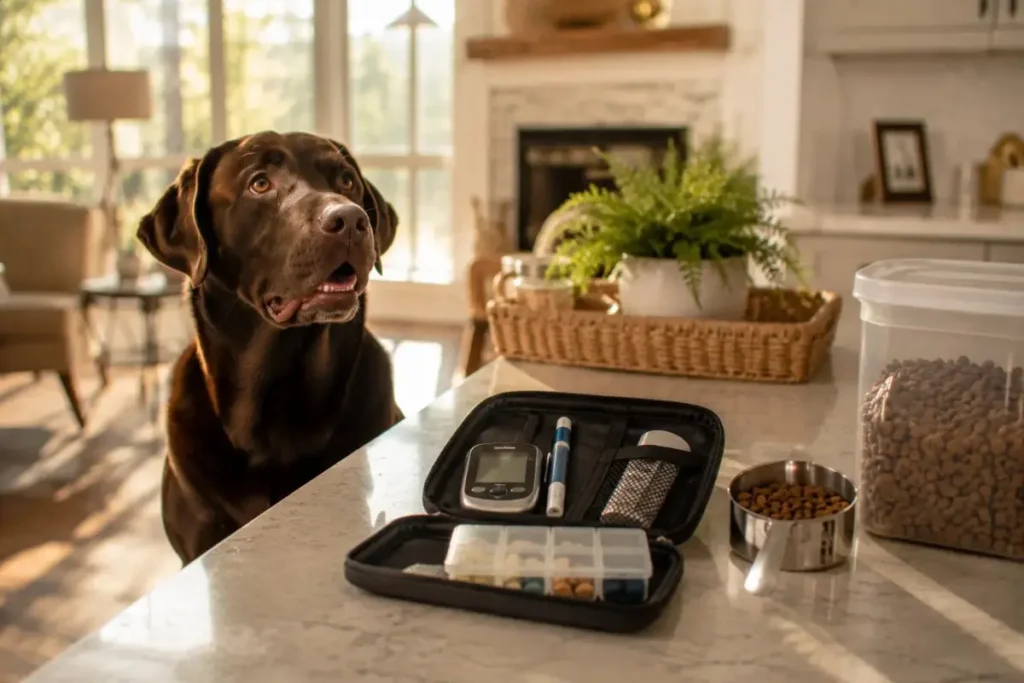
Diabetes Complications in Dogs: Are They Covered Too?
One of the most important and least discussed aspects of pet insurance for diabetic dogs is how secondary complications are classified. Dog diabetes frequently causes or accelerates several other conditions, some of which are expensive in their own right. The good news is that most major pet insurers treat complications arising from a covered primary condition as part of the same illness claim, not as separate, independently excludable diagnoses.
The most common and financially significant complications a pet insurance for diabetic dogs policy should be evaluated against include the following:
- Cataracts: Diabetic cataracts are extremely common in dogs and often develop rapidly after diagnosis. Unlike in humans, where cataracts develop slowly, a dog can go from normal vision to near-total blindness in weeks once blood glucose is unstable. Cataract surgery costs $2,800 to $4,200 per dog depending on whether one or both eyes are affected. Most insurers cover this as a complication of the underlying diabetes diagnosis when diabetes itself is a covered condition.
- Diabetic ketoacidosis (DKA): A life-threatening emergency that requires immediate hospitalization, intravenous fluids, and intensive monitoring. DKA hospitalization typically costs $1,500 to $5,000 depending on severity and location. Covered under standard illness plans when diabetes is a covered condition.
- Urinary tract infections (UTIs): Diabetic dogs are significantly more prone to recurring UTIs due to glucose in the urine providing a growth medium for bacteria. Treated individually as illness claims. Covered at most providers.
- Hypoglycemia: Dangerously low blood sugar resulting from insulin overdosing or missed meals. Can require emergency veterinary intervention. Covered as a complication of diabetes treatment.
- Pancreatitis: Both a potential cause and consequence of diabetes in dogs. Coverage depends on whether pancreatitis itself was pre-existing; if it developed after diabetes was diagnosed under an active policy, it is generally covered.
Why Trupanion's Per-Condition Deductible Changes the Math for Chronic Disease
Most pet insurance plans use an annual deductible that resets every twelve months. For a dog with a short-term illness, this structure is largely irrelevant; you pay the deductible once, get reimbursed for the rest, and the policy renews clean. For a dog with diabetes, which generates eligible claims continuously for the remainder of the dog’s life, the annual deductible becomes one of the most significant cost variables in the entire plan.
Trupanion is, as of this writing, the only major U.S. pet insurer offering a per-condition deductible structure. Under this model, you pay the deductible once per diagnosis, not once per year. Once your dog’s diabetes deductible is met, every subsequent claim related to diabetes, including all future insulin, glucose monitoring, vet rechecks, and complications, is reimbursed at 90 percent indefinitely, with no annual reset and no payout cap.
The financial math over a five-year diabetic dog’s life makes this clear. Under an annual $500 deductible plan, you pay $500 out of pocket toward diabetes costs in each of five years: $2,500 in deductibles alone, before co-insurance. Under Trupanion’s per-condition structure, you pay $500 once. Over five years with the same spending on diabetes care, you save $2,000 in deductibles alone, in addition to Trupanion’s higher 90 percent reimbursement rate versus 80 percent at many competitors.
The trade-off is that Trupanion’s monthly premiums are among the highest in the industry, and the plan does not cover exam fees, which as noted above can add up meaningfully for a dog attending six veterinary appointments per year. The per-condition structure is most advantageous for owners of high-risk breeds who enroll young and may eventually face exactly this kind of lifelong chronic condition. For a full breakdown of how Trupanion’s pricing, waiting periods, and VetDirect Pay system compare to alternatives, see our Trupanion Pet Insurance Review.
How and When to Enroll a Dog at Risk of Diabetes
Enroll Before Symptoms Appear, Not After a Diagnosis
The single most actionable recommendation in this entire article is the simplest one: enroll your dog in a comprehensive accident and illness plan while they are young and healthy, before any metabolic symptoms appear. For high-risk breeds like Australian Terriers, Samoyeds, Miniature Schnauzers, and Poodles, this means as early as puppyhood. For the general dog population, MoneyGeek recommends enrolling before age seven, when diabetes incidence begins to climb in dogs.
Know the Specific Symptoms That Trigger Pre-Existing Exclusions
The early signs of dog diabetes, increased water consumption, frequent urination, unexplained weight loss despite a normal appetite, and decreased energy or lethargy, are the exact observations your insurer will look for in prior vet records if a diabetes claim is later submitted. If any of these are documented in a vet record before your policy’s waiting period ends, the subsequent diabetes diagnosis will likely be excluded. This makes it critical that any vet visit showing these signs happen after enrollment and after the waiting period, not before.
Choose Unlimited Annual Payouts If You Own a High-Risk Breed
A $10,000 annual limit sounds generous until you calculate: $2,200 in routine diabetes management plus a $3,500 cataract surgery plus a $2,000 DKA hospitalization in one policy year equals $7,700, and that is before any other unrelated health events. For breeds with statistically elevated diabetes risk, choosing an unlimited annual payout plan eliminates the scenario where your coverage runs out before the year does.
Never Switch Insurers After a Diabetes Diagnosis
Once your dog is diagnosed with diabetes under an active policy, that policy’s continuation is your dog’s lifeline. A new insurer will exclude diabetes as pre-existing on day one. If your current insurer raises premiums at renewal after the diagnosis, compare the premium increase to the full out-of-pocket cost of diabetes management without coverage before deciding to switch. In most cases, even a significantly increased premium is financially preferable to uninsured chronic disease management.
Frequently Asked Questions
Does pet insurance cover insulin for diabetic dogs?
Yes, pet insurance covers insulin for diabetic dogs under standard accident and illness plans, provided the diabetes diagnosis occurred after the policy’s waiting period and is not a pre-existing condition. Insulin is not a special add-on; it is included in standard illness coverage because it is the primary prescribed treatment for canine diabetes. Monthly insulin costs for dogs range from $40 to $150, and at 80 to 90 percent reimbursement, insurance can recover $384 to $1,620 of annual insulin costs alone.
Can I get pet insurance for a dog already diagnosed with diabetes?
You can enroll a dog that already has diabetes in a pet insurance plan, but diabetes itself will be excluded as a pre-existing condition at every standard U.S. insurer. The policy will still cover accidents and all other unrelated illnesses, which may be valuable for a dog that could develop cancer, a cruciate ligament injury, or other conditions unrelated to diabetes. If full diabetes coverage is your goal, enrollment before diagnosis is the only path to it under current industry practices.
How much does it cost to insure a dog that might develop diabetes?
Pet insurance premiums are based on your dog’s age, breed, location, and selected deductible and reimbursement rate, not on whether your specific dog might develop diabetes. A healthy two-year-old Miniature Schnauzer will pay higher premiums than a two-year-old Golden Retriever partly because of its breed’s higher chronic illness risk profile. According to NAPHIA, the average monthly premium for a dog accident and illness plan in the U.S. is $62.44, though high-risk breeds and older dogs will pay meaningfully more.
Does pet insurance cover diabetic ketoacidosis (DKA) in dogs?
Yes. Diabetic ketoacidosis is a life-threatening complication of diabetes mellitus, and it is covered as part of the underlying diabetes claim when diabetes itself is a covered condition under your policy. DKA hospitalization can cost $1,500 to $5,000 depending on the severity of the episode and the clinic’s location. At 80 to 90 percent reimbursement, this is one of the single most valuable claims a diabetic dog’s policy can generate.
Which pet insurance is best for managing chronic dog diabetes long-term?
For long-term chronic disease management, Trupanion’s per-condition deductible structure is the most financially advantageous because the deductible is paid once and never resets for that specific condition, unlike annual deductible plans where you pay the deductible every year. Combined with its 90 percent reimbursement rate and unlimited annual payout, Trupanion is the most commonly cited provider for owners managing lifelong conditions like diabetes. Healthy Paws is a strong alternative for owners prioritizing lower premiums, since it also offers unlimited payouts and a faster 15-day illness waiting period.
Will my dog's insurance premium increase after a diabetes diagnosis?
Most pet insurers do not raise premiums based on a specific diagnosis within your current policy period. However, premiums typically increase at annual renewal based on your dog’s advancing age and general claims experience, which are factors regardless of diabetes specifically. Some insurers may apply a larger renewal increase after a high-claim year. ConsumerAffairs notes that chronic conditions like diabetes often lead to higher renewal premiums as insurers adjust for long-term risk. Never cancel a policy in response to a premium increase without calculating the full uninsured cost of diabetes management first.
What are the early signs of diabetes in dogs I should watch for before buying insurance?
The classic early warning signs of canine diabetes mellitus are increased thirst (polydipsia), abnormally frequent urination (polyuria), unexplained weight loss despite a normal or increased appetite, and progressive lethargy or decreased activity. These symptoms often appear months before a formal diagnosis is made. If you notice any of these in your dog, enrolling in pet insurance before they appear on a vet record is critical, since documented symptoms function as the insurer’s evidence of a pre-existing condition even without a formal diabetes diagnosis attached.
Does pet insurance for diabetic dogs cover cataract surgery?
Yes, at most major providers. Cataracts are the single most common complication of diabetes in dogs and can develop rapidly once blood glucose is chronically elevated. Cataract surgery costs $2,800 to $4,200 per dog depending on how many eyes are affected. When diabetes is a covered condition under your policy, cataract surgery arising as a complication of that diabetes is typically covered as part of the same illness claim rather than as a separate exclusion.
Is there any pet insurance that covers diabetes as a pre-existing condition?
No standard U.S. pet insurer currently covers diabetes as a pre-existing condition in the way most owners hope, that is, picking up the full ongoing cost of managing an already-diagnosed dog. AKC Pet Insurance has a pathway where some pre-existing conditions, including incurable ones, can become eligible after 365 consecutive days of continuous coverage, but this applies only under specific circumstances and requires a full year of uninterrupted enrollment first. For a dog currently on daily insulin therapy, this pathway is the closest the market offers to coverage for existing diabetes, though terms should be confirmed directly with AKC before relying on this as a strategy.
How much insulin does a diabetic dog need daily?
Most diabetic dogs receive insulin injections twice daily, timed with meals to match food intake with glucose regulation. The dose varies based on the dog’s size, current blood glucose levels, and the type of insulin prescribed (Vetsulin, NPH, or ProZinc are the most common in the U.S.). Larger dogs require more insulin per injection, which means a vial may not last as long and the monthly cost is higher. Your veterinarian sets the initial dose and adjusts it based on glucose curve monitoring, which typically involves periodic testing every one to three months once the dog is stable.
Can female dogs get diabetes more easily than male dogs?
Yes. Female dogs are two to three times more likely to develop diabetes mellitus than male dogs, according to data cited by Spot Pet Insurance and Cornell University’s College of Veterinary Medicine. The elevated risk in females is partly attributed to the hormonal influences of intact female reproductive cycles, as the hormone progesterone can trigger insulin resistance. Spaying significantly reduces this risk factor. Middle-aged and older female dogs of high-risk breeds represent the demographic with the greatest combined diabetes risk and the most compelling case for early pet insurance enrollment.

Emily Carter is a pet insurance researcher and editorial contributor at PetInsureNow, where she specializes in analyzing pet insurance coverage structures, hereditary condition exclusions, reimbursement models, and breed-specific insurance risks for dogs and cats.
Her work focuses on helping pet owners understand policy limitations, waiting periods, claim approvals, and long-term treatment costs before choosing a provider. Emily reviews insurer policy documents, veterinary treatment pricing trends, and consumer coverage guidelines to ensure every article meets the highest standard of accuracy.
At PetInsureNow, she contributes educational content designed to simplify complex insurance topics for everyday pet owners — translating dense policy language into plain explanations of what is covered, what is not, and what questions to ask before signing up.
✔ Coverage Accuracy Specialist
✔ Breed-Risk Analyst
✔ Independent Researcher
Areas of Expertise
Pet Insurance Coverage Analysis Verified breakdown of what accident, illness, and wellness plans actually include and exclude — checked against primary policy documents, not marketing pages. |
Hereditary & Congenital Condition Exclusions How insurers define and enforce hereditary exclusion clauses by breed — and what it means for dogs and cats predisposed to genetic conditions. |
Reimbursement Models & Deductible Structures Comparing actual cost vs. benefit schedule reimbursement and annual vs. per-incident deductibles — and how each affects real out-of-pocket costs at claim time. |
Waiting Periods & Policy Limitations Understanding the enforcement gap between enrollment and active coverage — and how waiting periods interact with pre-existing condition definitions at claim time. |
Breed-Specific Insurance Risks Which dog and cat breeds face higher premiums, stricter exclusion clauses, or limited coverage options — and what to ask a provider before enrolling. |
Veterinary Cost & Claims Education Long-term treatment cost breakdowns for chronic conditions — helping owners evaluate whether a policy’s coverage limit is realistic for their pet’s health profile. |
How Emily Ensures Content Accuracy
1 | Primary Source Review — All coverage claims are verified against insurer policy PDFs, sample Certificates of Insurance, and published exclusion schedules — never from marketing summaries. |
2 | Veterinary Pricing Research — Cost estimates are cross-referenced against industry pricing data and published treatment cost trends for realistic financial context. |
3 | Plain Language Standard — Every article is written for pet owners with no prior insurance knowledge. Technical terms are always explained, never assumed. |
Topics Covered
Cat Insurance
Hereditary Exclusions
Waiting Periods
Reimbursement Models
Pre-Existing Conditions
Claim Approval Process
Breed-Specific Premiums
Policy Comparisons
Bilateral Exclusions
Wellness Add-On Plans
Long-Term Treatment Costs
Editorial Disclosure: Emily’s articles are research-based and intended to help pet owners understand pet insurance options. They do not constitute licensed insurance advice. Always review full policy documentation and consult a licensed professional before purchasing any plan. See our Editorial Policy and Affiliate Disclosure.